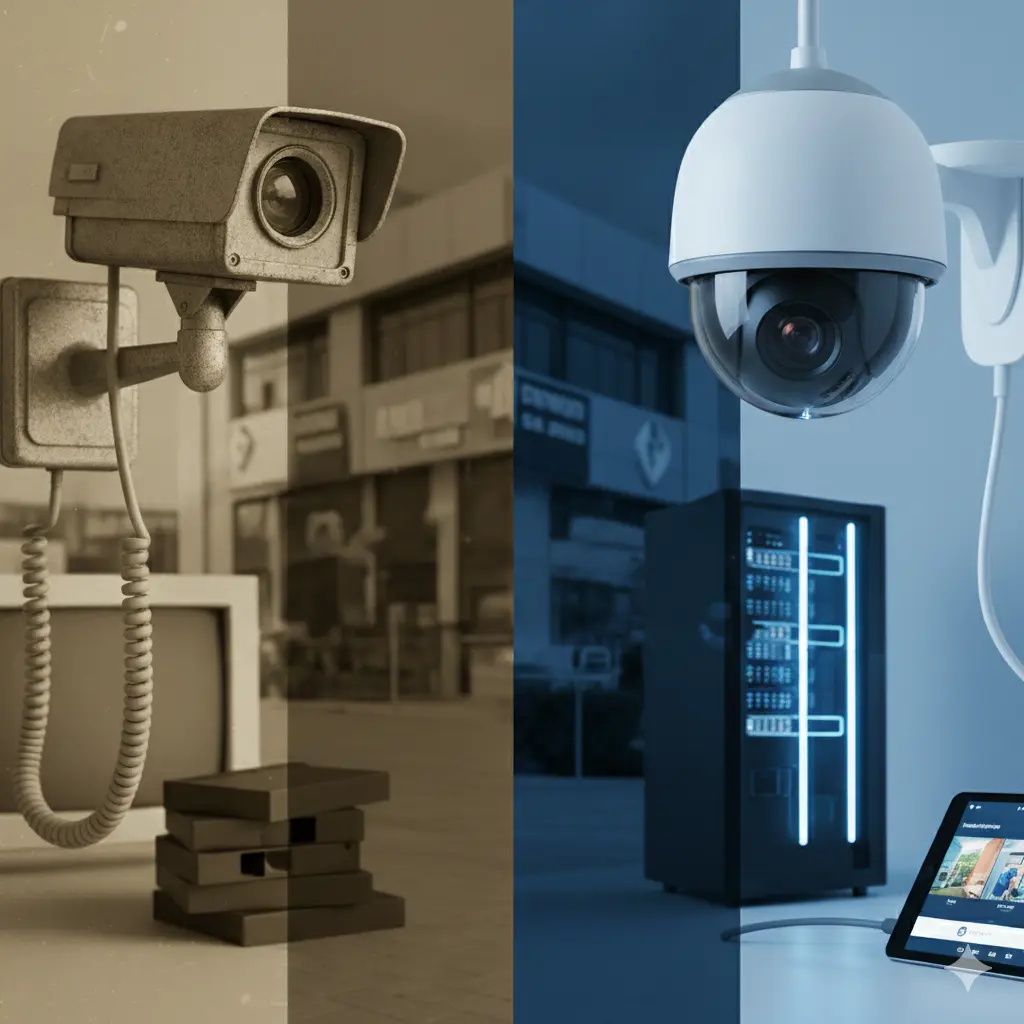
When planning a security camera system, one of the first decisions you must make is choosing between IP cameras and analog cameras. These two technologies look similar from the outside, but they perform very differently. Understanding the strengths and limitations of each helps you choose the best system for your home or business—without wasting money or ending up with outdated equipment.
This guide breaks down the difference in simple words, using real examples from installations across Dallas–Fort Worth, so you can confidently decide what fits your property.
What Are Analog Cameras? (The Old Technology)
Analog cameras are the older style of security cameras commonly used years ago. They run through coaxial cable and connect to a DVR (Digital Video Recorder).
Even though many installers still offer them, it’s important to understand what they really are:
- Lower image quality
- Limited zoom and detail
- Less reliable night vision
- No smart detection features
- Lower long-term value
However, they do have a place in certain situations.
When Analog Cameras Make Sense
- If you have an older system already wired with coax
- If you need a budget-friendly upgrade
- If high detail is not required
- If you only monitor general movement, not identification
For example, some small shops in DFW with old DVR setups choose to keep analog cables and upgrade only the cameras—saving money.
What Are IP Cameras? (The Modern Standard)
IP cameras are digital cameras that send high-quality video through network cables (Cat5e/Cat6) to an NVR. These systems are the modern choice for professional installations.
They deliver:
- 4K or higher resolution
- AI-based motion detection
- Long cable distances without quality loss
- Much sharper night vision
- Stronger reliability
- Easier scaling for large properties
Most new installations in Dallas–Fort Worth today are IP-based because they offer clearer video and a longer lifespan.
Image Quality: The Difference You Actually Notice
Many people are shocked when they compare IP vs. analog video side by side. Analog cameras often look fine during daylight—until you need details.
Analog Video:
- Good enough for basic monitoring
- Blurry faces and plates
- Grainy at night
- Limited zoom
IP Video:
- Facial details
- License plates
- Clothing patterns
- Colors and motion accuracy
- Clear nighttime images
This difference matters most during real events—package theft, suspicious activity, vandalism, or internal issues in a business.
Night Vision: Where IP Cameras Really Win
Dallas has bright days but dark nights. This contrast is a problem for analog systems.
IP cameras use:
- Better sensors
- Infrared technology
- Color night vision (ColorVu / Full Color)
- Smart exposure control
This gives you video where you can actually see what’s happening—not just shadows.
If you want usable footage in the evening or nighttime, IP cameras are the clear winner.
Scalability: Growing With Your Property
If you plan to expand your security system later, IP cameras make life easier.
With IP Cameras:
- Add more cameras without rewiring
- Mix different resolutions
- Combine outdoor and indoor models
- Use AI features like person/vehicle detection
With Analog Cameras:
- Limited DVR channels
- Harder to mix camera types
- Lower quality across the entire system
Businesses especially appreciate the flexibility of IP systems because they can grow over time.
Smart Features: The Future of Security
Analog cameras offer basic video—nothing more.
IP cameras offer smart tools you actually use:
- Human detection
- Vehicle detection
- Motion zones
- Mobile alerts
- Two-way audio
- License plate capture (with special models)
- Smart search in playback
This saves time and makes monitoring easier. Instead of scrolling through hours of footage, the system tells you exactly when a person or car appeared.
Reliability and Long-Term Cost
Many people look at analog cameras because they’re cheaper upfront—but not cheaper long-term.
Analog:
- Shorter lifespan
- Harder to repair
- Lower resale value
- Technology becoming outdated
IP Cameras:
- 8–12 year lifespan
- Easy to replace or upgrade
- No quality loss over distance
- Works with modern NVRs and apps
An IP system costs more upfront but lasts much longer and supports future upgrades.
What’s Best for Homes?
For homes in Dallas–Fort Worth, IP cameras win almost every time.
Reasons:
- Better night vision
- Clearer video for package theft
- Motion alerts
- Smart notifications
- Clean wiring
- No subscriptions
- Better evidence in case of a break-in
Homeowners want clarity and reliability—IP delivers both.
What’s Best for Businesses?
Businesses benefit even more from IP systems because:
- They often need 8–32+ cameras
- They must identify employees, customers, or suspects
- They need long playback
- They monitor outdoor areas and parking lots
- They require scalable systems
Analog is rarely recommended unless a business is stuck with coax wiring and wants a temporary upgrade.
Final Answer: Which One Should You Choose?
Here’s the simple conclusion:
✔ Choose IP cameras if you want clear video, strong night performance, smart features, and long-term value.
✔ Choose analog cameras only if you’re upgrading an old coax system and need a temporary or budget-friendly solution.
For almost every modern home or business in Dallas–Fort Worth, IP cameras are the best choice. They offer the detail, reliability, and future-proof technology needed to keep your property protected for years.