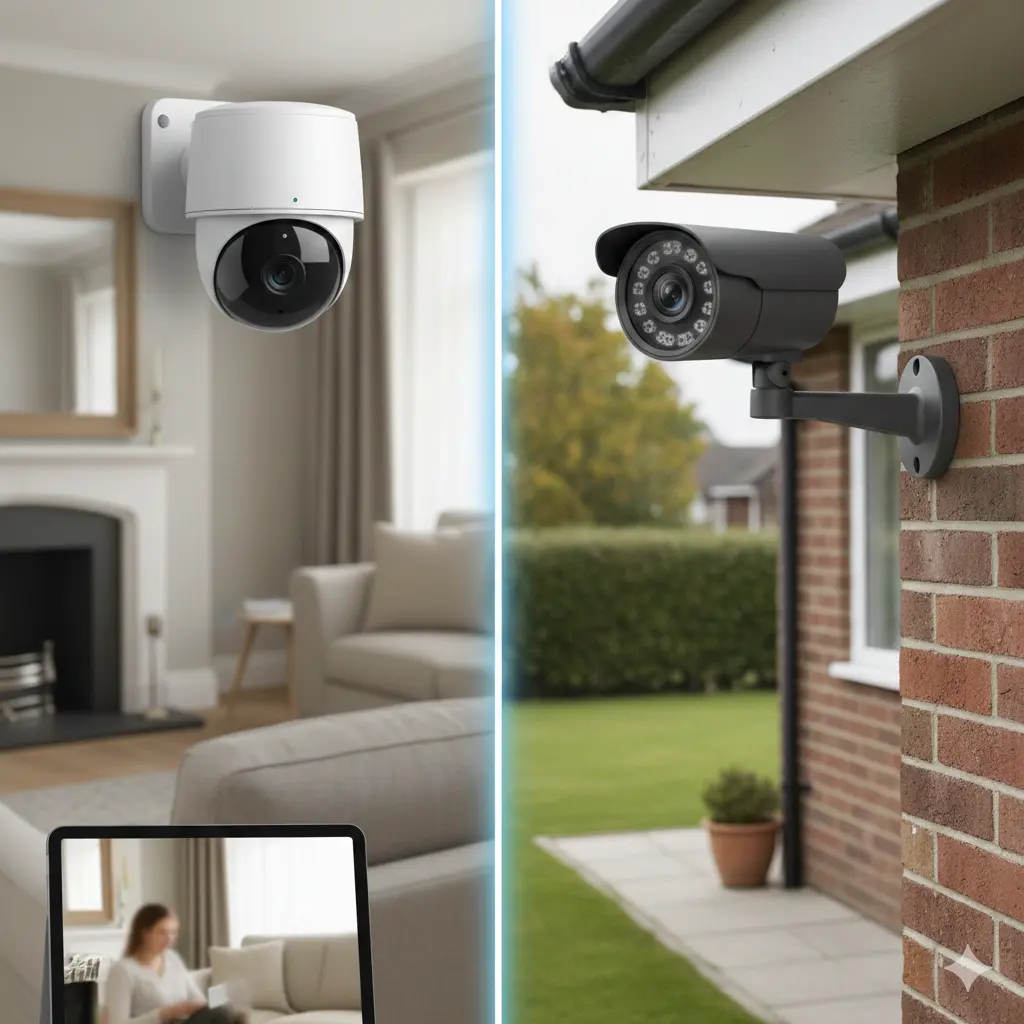
When homeowners or business owners decide to install a security camera system, one of the first questions they face is simple—but surprisingly important: Should I get indoor cameras, outdoor cameras, or both? While many articles online give generic answers, the truth is that your property layout, lifestyle, and security goals determine what you really need. Indoor and outdoor cameras serve different purposes, use different technology, and protect different areas of your home or business. Understanding those differences helps you invest in the right system instead of wasting money on cameras you won’t use.
In this article, we break down what indoor and outdoor security cameras do best, when each type is essential, and how to design a balanced system that actually protects your property—not just creates a false sense of security.
What Makes Outdoor Cameras Essential for Most Properties
Outdoor cameras are usually the first line of defense. They cover the perimeter and record the activity happening before anyone reaches your home or business. Because most security threats begin outside, outdoor cameras do most of the heavy lifting.
Here are the most important roles of outdoor cameras:
1. Monitoring Entry Points
Doors, driveways, side gates, garages, and backyards are the most commonly targeted areas. Outdoor cameras with wide-angle lenses and strong night vision can catch suspicious activity before someone even approaches the door.
2. Deterring Criminals Before They Act
A visible outdoor camera is often enough to stop a potential burglar. Criminals don’t want to be recorded, especially on high-definition systems that capture clear faces and vehicles. Outdoor cameras reduce crime simply by being present.
3. Handling Weather, Heat, and Harsh Lighting
Outdoor cameras are designed for tough conditions—sun, rain, heat, wind, and even insects. In Dallas, where summers hit 100°F and storms come without warning, indoor cameras simply can’t handle those conditions. Outdoor-rated cameras (IP66 or IP67) ensure your system works year-round.
What Indoor Cameras Actually Do Best
Indoor cameras are more strategic. They don’t monitor everything—they watch what matters most inside.
1. Protecting High-Value Areas
These include:
- Safes
- Offices
- Storage rooms
- Cash drawers
- Children’s play areas
Indoor cameras catch theft, accidents, or unauthorized access where the most sensitive items are kept.
2. Monitoring Activity When You’re Home or Away
Indoor cameras help you check:
- Whether kids arrived home safely
- If maintenance workers followed instructions
- What pets are doing
- Whether elderly family members need assistance
Indoor footage is less about intruders and more about awareness.
3. Providing Clearer Audio and Detail
Indoor cameras don’t need heavy weather protection, so they focus on:
- Better audio recording
- Clearer image processing
- Wider viewing angles
They operate in controlled environments, which allows much sharper indoor detail than many people expect.
Do You Need Both Indoor and Outdoor Cameras?
For many homes and businesses, the answer is yes—but not always everywhere. Here’s how to decide:
When You Need Outdoor Cameras Only
Outdoor cameras are enough if:
- You want basic home protection
- You mainly care about crime deterrence
- Your goal is package protection and driveway monitoring
- You don’t want cameras inside your living space
Most homeowners start with outdoor cameras because that’s where 95% of threats begin.
When You Should Add Indoor Cameras
Indoor cameras are useful if:
- You have valuable items inside
- You own a rental property (Airbnb or long-term rental)
- You have employees working indoors
- You want to monitor kids, pets, or elderly family members
- You want a record of what happens after someone enters
Remember: if an intruder breaks in, indoor footage shows what they touched, took, or damaged.
When You Need a Full Indoor + Outdoor System
You absolutely need both if:
- You run a business with customer access
- Your home has multiple side entrances
- You live in a high-traffic neighborhood
- You want maximum coverage and evidence
- You want full visibility inside and out
This is the most professional setup—and the standard for modern smart homes and commercial properties.
Technical Differences Homeowners Should Know
Even though indoor and outdoor cameras look similar, their technology differs.
Outdoor Cameras Usually Have:
- Stronger IR night vision
- Weatherproof housing
- Anti-glare lenses for sunlight
- Wider fields of view
- Higher mounting points
Indoor Cameras Usually Have:
- Audio microphones
- Pan/tilt options
- Smaller, more discreet designs
- Better low-light performance without IR reflection
- Tighter, more controlled viewing angles
Choosing the wrong type for the wrong location leads to poor image quality and lower reliability.
The Smartest Setup for Most Dallas Homes
Based on thousands of installations in the Dallas–Fort Worth area, here’s what works best:
Minimum Setup (Budget-Friendly):
- 2 outdoor cameras (front and back)
- 1 indoor camera near the hallway or main area
Standard Setup (Most Common):
- 4–6 outdoor cameras
- 1–2 indoor cameras for high-value or high-traffic areas
Premium Setup (Full Protection):
- Complete outdoor perimeter coverage
- Indoor coverage for key rooms
- Smart motion alerts
- Remote viewing and playback
- 4K video for sharper details
This protects the entire property and gives homeowners peace of mind.
Final Thoughts
Indoor and outdoor security cameras serve very different purposes—but together, they create a complete safety net around your home or business. Outdoor cameras prevent crime and monitor activity before it reaches your door. Indoor cameras provide awareness, protect valuables, and document what happens inside. Instead of choosing one or the other, think about what areas matter most and build a system that matches your lifestyle.
The right combination of indoor and outdoor cameras can protect your property more effectively, reduce risks, and keep your family or business safer.